Facebook Page

Friday, February 15, 2013

European BJJ

Just thought I would share a few links to some blogs and pages that I like...

These pages belong to Christian Graugart and Martin Aedma respectively who are in my opinoin two of the best minds in Jiu Jitsu in Europe, this is both to do with their games and skills as well as their personal philosophies.


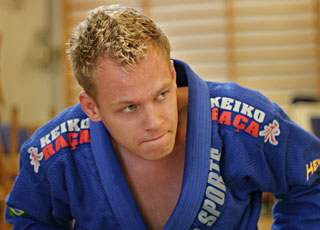
First is Christian Graugart, who can be found on either of the 2 links below. Christian is a great grappler from Copenhagen, Denmark and is the now famous "BJJ Globetrotter". In addition to his dedication to Jiu Jitsu I really his philosophy on no politics, this is exemplified by the global team that he has set up, "The BJJ Globetrotters", their value system is basically everything I am behind (just written more articulately, not bad for a guy with english as a second language).


Well worth checking out...
http://www.bjjglobetrotter.com/
http://www.shogunhq.com/


Second is Martin Aedma, a BJJ Black Belt and true pioneer from Estonia. Martin is a strong competitor who seems to truly believe in the integration of Jiu Jitsu, Judo and Wrestling, he has even coined the phrase "Wrest-Jitsu" to describe his concepts, this is a concept that I try to instill in my classes as well. Martin has a blog that has some great breakdowns of everything from passes, to sweeps, to chokes, I really have gotten a lot from it.


Check it out here.
http://martinaedma.bjj.ee/


Lastly here is a great vid that Christian created of Martin demonstrating his pressure passing called "Estonian Guard Passes from Hell".


Both cool guys and have a lot to teach....


Tuesday, October 23, 2012

Training Trip

I have just gotten back from training trip to Melbourne, Australia. I was privileged to train with 4 of the best BJJ black belts in Australia, Lachy Giles, Alex Santos, Dave Hart and John Simon.

All of these men taught me some great new concepts and gave more of themselves than just time.

I spent time learning the latest in guard technique as well as solid passing. In particular I have learnt a lot about berimbolo, single leg x guard, de la Riva, and reverse de la Riva. I also learnt done great concepts for dealing with both open and closed guards.

I can't recommend these guys highly enough and I am sure you will agree if you goo and train with them. When you are next in Melbourne make sure you call into renegade MMA, Melbourne martial arts or dominance MMA.

Sunday, September 16, 2012

What really matters?


What is important in BJJ Training?

The more time you spend training in a martial art, the more opinions and thoughts seem to emerge amongst your peers on what is really important. In Brazilian Jiu Jitsu, there are as wide a variety of these opinions as any other. I find myself thinking again and again though, “how much of it really matters?”

One of the topics that seems to generate the strongest opinions in my gym is what side of the body the ranking tab of a BJJ belt should sit. Opinions are divided and often forcefully argued on this subject, at this point I should probably mention that not everybody in my school even has a ranking tab on their belt still manage to attach stripes to their belt without a problem.
The opinion that I lean more and more toward is that it really doesn’t matter what side of their body the stripes are on. In my case I have never had my arm bar work more effectively one way or the other, and I have never had better resilience to the bow and arrow choke one way or the other. The only factor involved that matters in my opinion is practice.

Mind you, I still hear a lot of views on this (often quite aggressively) from some of the more forceful members of the academy, usually to the tune of “the belt must be be worn with the tab on the left side because that is how (insert famous gracie name here) did it”. After hearing this for the millionth time I thought perhaps I should look into it. My initial thought was to google some grandmasters and see what they do, but I thought better of that and thought I would try to prove my point that it really doesn’t matter.

With that in mind I have assembled some pictures of notable BJJ practitioners below with the ranking bars on either side.

First of all here is Masters Alvero Barretto and Oswaldo Fadda with Grand Master Helio Gracie, as youcan see both Barretto and Fadda are wearing their bars on the left and Helio has his on the right.


These next too images show Master Fadda and Grand Master Helio wearing their belts the opposite way from the picture above.


Below is two images of Carlson Sr one with the bar tothe left nad one to the right.


My opinion after seeing that all of these Masters of our Art don't care one way or the other is that maybe we shouldn't either. Perhaps like them we should all focus on what is important and that is training and more importantly improving.

Just my thoughts...


I have thought that today (the 25th of July 2013) might be a good day for an update to this article. As this whole discussion was originally based on the way Rickson supposedly wore his belt, I have found a pic of Rickson wearing his belt with the rank tab on both the left and the right.


Rickson with the tab on the left
Rickson awarding the Red and Black Belt to Jean Jacques Machado, tab on the right.
And look at this collection of Gracies, tabs left, tabs right, it is chaos....

Wednesday, December 21, 2011

A big honour....

So as the picture shows, my long time coach Adam Newton at Hybrid Training Centre honoured me by awarding me with my brown belt tonight, for those of you who don't know what that means, it is a big thing.....


I first tried out BJJ in about February of 2001 and tapped to Pete Rogers' Side Control (pressure to the solar plexus), I stuck with BJJ ever since then and still tap a lot.

So after nearly 11 years, 3 clubs, 2 cities, one marriage, 2 kids, 1 gold, a few silver and several bronze medals (as well as lots of taps), 1 full shoulder reco, 1 full grade 3 LCL rupture, 2 broken fingers, several popped elbows, various black eyes, many coaches, many students, a few tantrums and 100s of new friendships, I have finally reached brown belt. BJJ is definitely a life's persuit....

Thanks everyone for being in my life and contributing to my experience.

Thursday, July 21, 2011

Another year, another stripe...

So a bit of perspective... I was promoted to my 2nd brown stripe last, my first came in august 2010. It's a good perspective for those expecting a new rank or belt every few months, short answer the longer you train the longer the road becomes.

If i keep grading at the same rate I'll get my brown in May 2013, and i reckon that is great imagine what i will have learnt by then?!

Thursday, October 07, 2010

twice the father...

Hi Everyone, Just thought I'd let you all know my 2nd son Evan was born today... he is huge Amanda and I are really proud!

Saturday, October 02, 2010

Waiting...

Today my wife is 3 days overdue with our second child... waiting can be pretty hard, but I know we are going to have another little champion. Nearly 3 years ago we waited 13 days past our due date for our first born and now we are waiting again... the wait though, I know will be worth it!

Monday, August 23, 2010

One Step Forward

Bit of a surprise,

Tonight on the mat Adam surprised me by awarding me my first brown stripe, one closer to brown belt. Wasn't expecting that, so now I guess it is time to really step up!

Of course just to remind me of why I train and what BJJ is all about one of our white belts tapped me with a cradle choke tonight, that really makes me happy.

Fun times...


Friday, July 16, 2010

GnP

It turns out that playing guard is harder to do when your opponent is striking....

I was just working towards an armbar that would have made Sergio Penha proud and then... BOOOMMM!!! my opponent was out, what an escape!

Sunday, February 28, 2010

2010 Inter Gracie Championship

I recently competed in a Submission Wrestling Tournament in Sydney. I got a silver medal in the Light Heavy weight division. It was a great day, I have included a clip here of one of my bouts. I was paying particular attention to the clinch aspect in this amtch as I have been doing a light of private training on my wrestling and judo recently. I also got to showcase my leg lock game as well which was a lot of fun.

Tuesday, December 01, 2009

What do we take from comp performances?

Well in recent times I have had a few comps where I have a had some successes. The great thing about competing is that you are forced to work under maximum pressure your margin for error is greatly reduced. In addition the pressure makes it very difficult to think clearly so that you can usually only pull off things that you have done enough reps of to really concrete into your game.

Usually after I roll I am able to recall the bout and what went well and what didn't, I find it harder to do in comps though because of the pressure that I mentioned. When I am able to picture certain things that happen in comp bouts through I can usually be pretty happy that I must have a good understanding of any of the moves that I had success with. For example in the recent 2009 Tasmanian Champions Cup I finished matches with, among other things: a Triangle/Arm bar combination, a Clock Choke and various Figure 4 arm locks. I also pulled off a few half guard sweeps, an X Guard sweep and a Hooks Guard Pass I have been working on. Whilst I am not the best in the world at any of these techniques, I am happy to know that they are hard wired enough to work for me even under pressure.


What do I learn from this defeat to Jim Reid? Even if you tap you still sometimes go to sleep.

Anyway the two most recent comps I have been in are:

The Hybrid "No-Gi" grappling tournament in Sep 2009 in which I came third in the heavy weight division.

The 2009 Tasmanian Champions Cup in which I came third in the Purple Belt division (open weight) and won all fights in the team event, my team of 6 also won the event. - As a side note the winner of the Purple Belt Division was my good friend Jim Reid, who was awarded his Brown Belt shortly after the comp by his coaches Mario Yokoyama and Adriano Magnani of Gracie Oceania. Congratulations Jim, really well deserved!

The next comp will be another Hybrid No Gi comp in Feb 2010, hopefully I can place at that one as well, but if not I am sure it will be a good development for me at least.

Anyway I am off, keep on grappling and stay safe.

Friday, May 22, 2009

Paddy and Daddy


Here is a recent pic of me and my son Paddy, he seems to have inherited my awesome thighs (thick, but apparently dangerous to be triangled by...), so much so that I had to have his Grandma make him a new pair of gi pants as the Fuji ones appear to have been designed for a thinner leg.

Sunday, December 14, 2008

Kill the Advance Party

Recently I have been helping on of my students with his rolling reversals from under side control. Doing this of course got me thinking about the importance of not letting the opponent pass your guard in the first place and if he does pass taking action that gives you the chance to roll him off.

As usual when I am teching my imagination ran away with me and I started thinking of silly analogies to help with the teaching points. In this case I said that when your gaurd is passed it is akin to being invaded by an agressive foreign force and the lead arm is the advance party of this force. As in battle, by taking out the advance party you can confuse and disorientate the main force, in BJJ terms by controlling the leading arm you make it hard for the opponent to establish control. The result is that it is easier to regain guard or to setup a reversal.

A few options for working with this include: overhooking the arm, underhooking the arm, double hand blocking/kimura, stuffing the arm and also pillow defence (although this is an entirely separate kettle of fish).

In all cases the task is to prevent the leading arm from establishing control of your upper body, particularly with cross face. Regardless of how this is done the point is destabilise, if through this action you can regain guard the that is the best choice, using anything you need to such as shin blocks and crossovers etc. If you are unable to block the pass but you can control the lead arm, the next step is to hip away and face your opponent slightly then reach your far hand over their back and grab their belt or their lat. With their lead arm blocked you can shuffle round so that you are in a straight line with your opponent and then bridge and roll to take the top position.

Mental Toughness Training


I have been trying to squeeze two kettlebell workouts in a week for the last month or so, and have been alternating between two basic variations. Both require mental toughness as much as fitness and strength, which is important for any fighter.

The first is based on Steve Maxwells 300 workout where I do 300 individual repetitions of 18 different exercises without putting the bell down. This workout has a warmup component, a ballistic component, a strength component and a core component. I have been doing this with an 18kg bell and my best time is 20 minutes and 2 seconds so far.
The second is simlar but varies a little in that I do the same warmup component and then do 3 identical rounds consisting of 5 different exercises and a total of 90 reps each. Similarly I don’t put the bell down between rounds so I rest but not so much. Of the 2 this is probably the tougher workout as I really drive certain muscle groups to fatigue through doing more repetitions of less exercises. Also it is pretty close to doing three five minute rounds so is like a fight in that regard. My best time for this one is 17 minutes and 29 seconds including the warmup.

As I mentioned of the two the second is probably tougher and requires more drive to complete it, but the first covers a wider variety of movements so is more of a full body workout. I am thinking that my next goal will be to design a workout with shorter rounds probably around 2 minutes and then work towards doing 10 rounds. I’ll see how that works though.

Sunday, November 09, 2008

Arm Drags

As with many techniques and concepts in Jiu Jitsu for me arm drags have followed the same progression. That is to say, we are shown a technique, we try to make it work (with more or less success), then it “clicks” and the mechanics of the technique start to become evident. After that you usually start to get a few notches on your belt and develop an ownership for the technique.

For me this has happened with arm drags quite recently, which is allowing all the good things that come with arm drags including; taking the back, triangles and sweeps. I found that the key seems to be not so much in the “dragging” the arm, but in “hanging” from the arm. As I reach an arm accross to the inside of of my opponents opposite bicep and start to pull the arm accross, I lift my back and hips slightly off the ground so that my weight is directly hanging off my opponents arm. This makes it very difficult for my opponent to escape and makes the speed of the arm drag a lot quicker. As soon as I drag the arm, I consolidate by getting about halfway to the back, grabbing my opponents far lat to “close the door” on my opponents arm and putting my outside leg over their back to start climbing on their back. From their I have been trying for three options (Plan A, B and C if you like).

1. Taking the Back - Once the arm drag is complete you are already half way to the back. To consolidate the position I like to reach over the back and get a paddle grip on the far arm as I slide my far leg further over the back to get a hook. While I do this I climb more squarely onto the back using the paddle grip for an anchor. Once on the back I use my near arm to either attack the neck or setup a harness.

2. Triangle - This is a far more successful option for me as most people tend to defent the back very hard. Essentially as I am completing the arm drag I take my inside knee quite high towards the opponents chest. Once in place I maintain my grip on my opponents far lat to keep my attachement to them and then use my other hand to block their far arm. To clear the arm and get to “triangle guard” (one arm in one arm out) there are two basic options. The first is to block the arms movement and bring my knee and foot inside their arm and around the neck. The Second is when the person triest to use the arm to pin my leg and attempt a pass. In this case I push the arm between my legs while I swing my leg around and over the neck. In either case once I have cleared the arm, I have Triangle Guard and can complete the triangles as I normally would.

3 Hooks Sweep - There are 2 basic ways to get the hooks sweep from the arm drag, one towards that arm that is dragged and the other is away. I most commonly go for the away from the arm drag option, as I find it easier as the opponent is already unbalanced and there abaility to post is killed by the arm drag, I basically use my inside arm as an underhook and sitout to the underhook side and lean back for the sweep. The other option is the to go towards the arm drag. In this scenario, you reach the inside arm out over both your opponents arms to kill the post. You are already sitting out to the side so you lean down and do the sweep.

There arm many more things that can be done from the arm drag, but that is the 3 things that are working for me the most at the moment.

Have fun stay safe on the mat!

Thursday, November 06, 2008

Can Openers


When I say “Can Openers” a lot of people get the image of neck cranks from inside guard a la Tito Ortiz, but that isn’t what I am looking at here. These can openers are means seperating a persons arms from their body when they are defending really well in the bottom position. I have been working with three different types of can openers recently;

1. The “Homer Simpson” - I picked this name as it resembles Homer’s celebratory habit of lying on his side and “running” in a circle. Essentially this technique is from side control and is used to clear the far arm from the body to insert an underhook and go for submissions. To do it you grab your opponents far trap (as you would with an underhook) and make sure that your bicep is between his elbow and body. Then making sure that your chest is low enough to be below the level of your opponents forearm do the tight Homer Simpson walk around the head of your opponent until the arm is clear. Once it is free you have many options, such as a progression of submissions like: Figure 4, Straight entangled Arm Bar, Far Arm Bar.

2. The Wrist Drive - This technique is much like the previous one and achieves a similar result, the only difference is that instead of driving in a circular motion around the body, the pressure goes in a straight line driven by both feet. Start by gripping the arm in the same way as the previous technique, but slide your chest up to the wrist. Once there drive accross the body with both legs, this should apply maximum leverage on the elbow and force the arm away. Once arm is seperated follow the same submissions as the previous example.

3. The Smear - Unlike the previous two can openers, the smear is done from front control and is used to clear an arm to setup a forearm choke or front headlock. In essence I use the inside of rib cage as a hook to drag the opponents arm away from the body. Start in front control and move slightly further down opponents body so you can get your rib cage over the opponents elbow. Then keeping tight to their body move laterally back and forth smearing their arms away from their body. As soon as the arm clears the body drop your elbow into the arm pit to keep it seperated. From there you can start to attack with Front Headlocks or setup a forearm choke, it is also a good scenario for setting up a cross face with the arm trapped.

Heaps of Fun have a crack!

Tuesday, November 04, 2008

X Guard


I am still really only scratching the surface of this great game, but I am liking what I am finding. X- Guard has become my answer for people who manage to flatten me out in Half Guard, even if I have the appropriate underhook sometimes people still cross face so well that I am flat out on my back, especially with stronger opponents. My approach is to under hook my opponents free leg and start to shuffle my self further under them, this originally came as a result of avoiding the discomfort of the cross face, but pretty soon turned into “Back Door Escape”. When I am dealing with someone to strong for the back door option or who is to low to make it work, I trap the opponents far heel to the ground with my inside leg and then insert my outside hook. Then using the hook and my arm I can create enough space to insert the rear hook. It is really important when you are transitioning to full X-Guard that you use your free arm to block your opponents knee so they step over your hook to mount.

Now, the sweeps, there are 2 I have been doing regularly and one I have been trying (poorly)...

1. Ankle Grab - This sweep involves grabbing the outside of the opponents far ankle with your free hand. Then by pulling in on the ankle as you extend your hooks you can cause your opponents to fall back, you need to go to your knees and under hooks both legs straight away to get your pass and avoid the triangle though.

2. Hi/Low Hooks - To do this sweep slide your front hook down to the opponents ankle and your rear hook up as high as possible. The by extending both legs you cause the opponents far leg to be swept out from underneath them, they should fall backwards. As above underhook both legs to pass.

3. Near Arm control - This is a sweep or more accurately a series of sweeps that I am playing with from watching Marcelo Garcia, it involves controlling the opponents near arm and passing it to your underhooking arm to grip the sleeve or wrist. The idea, as near as I can tell, is to take more control of your opponent to do basically all the other X- Guard sweeps, or to free your hand up to pull down on the opponents lapel to give you rolling sweeps. To date I have had only marginal success with this, however I supect the weakest link is me not the technique at this stage!

Monday, November 03, 2008

Triangles


As I have mentioned in previous blogs I was a self confessed “Triangle Spastic” until about 6 months ago, in that most of my game was going OK and developing well, but I couldn’t get a triangle for love or money. Now that I have scaled the invisible barrier though I am actually finding that I’ll get 1 or 2 taps with triangles every time that I roll. So what has changed? Basically I have gotten better at them... But it is more that that it is also my approach, this has 2 steps,

1. Clear one arm to get what I call triangle guard and
2. Cinch up the choke and finish.

The big improvement is not only getting good at those 2 parts individually but also seemlessly linking the 2 of them and performing them with control at all times. A bit of a dogged tenacity in the application doesn’t hurt either as opponents tend to get a bit of the “a tiger is at most dangerous when cornered” thing going on and really explode to get away as you are trying to finish it.

In terms of the details of those 2 steps though the things that I am looking for as follows:

1. Clearing the arm. Ther are heaps of ways to achieve this, but other than specific gameplans to achieve this (eg rubber guard etc) the things I have the most success really revolve around cutting angles away from the arm I am trying to clear. Basically by this I mean doing something like faking an Omoplata attempt or getting an Underhook and sitting my hips out to that side. I have been getting arm drags and faking going for the back then clearing the far arm as well. In each case this gives me more freedom to control the opponents far arm and either force my leg past it or push it between my hips. As soon as I clear the arm I immediately cross my legs and control the opponents posture. Which brings me to Point 2.

2. Finishing the Triangle. When I was developing whatever ability I have at the Triangle Choke I knew I had to divide them into these points, and while I knew the variations for point 1 were endless, I really didn’t want to too much variation on point 2. So the keys are making sure that I turn my body to make the angle for my calf to cut accross the neck (rather than relying on my non-existent flexibility). This involved doing various things to keep the person from posturing, usually underhooking the free arm and “hanging” my weight as well placing my palm over my ankle to lock my leg down on the neck. From here it is jsut a question of triangling my legs and squeezing my knees. The only points tidy up the choke for me are: pointing both sets of toes to the ceiling, doing a slight crunch and often getting a gable grip on the free arm and squeezing down to prevent turning out of the choke.

For me that is basically Triangle, without going into a detailed description of every setup I know that is!

Sunday, November 02, 2008

My coach, Adam Newton, awarded me my first purple stripe today... woo hoo!